Drupal4Gov EU 2026: How Drupal Powers European Institutions and National Governments
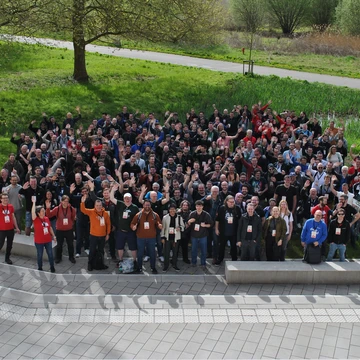
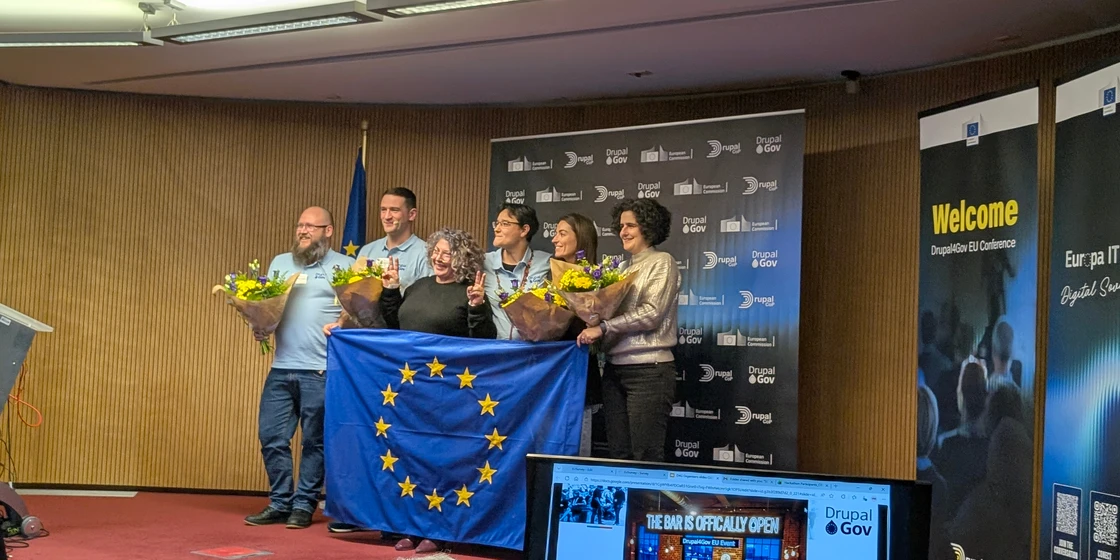
Last week, the Drupal4Gov EU conference took place on January 29, during EU Open Source Week in Brussels, right in the heart of the European Quarter at the BREYDEL building of the European Commission. The event was hosted by the Drupal Community of Practice @ EC and EUIBAs and organized by Frederik Wouters, together with Drupal Belgium and Drupal France. It brought together policymakers, digital leaders, and technologists from across Europe's public sector. I was happy to join and connect with many attendees throughout the day.
The keynote by Sachiko Muto, Chair of OpenForum Europe, Senior Researcher at RISE, and Drupal Association Board Member, set the tone perfectly. She made the case for unlocking public sector contributions to open source, with a memorable framing: there are two kinds of organizations today, those that know they depend on open source, and those that don't yet know that they do. With digital sovereignty now a strategic priority at the highest levels of European politics, the momentum for open source in government has never been stronger.
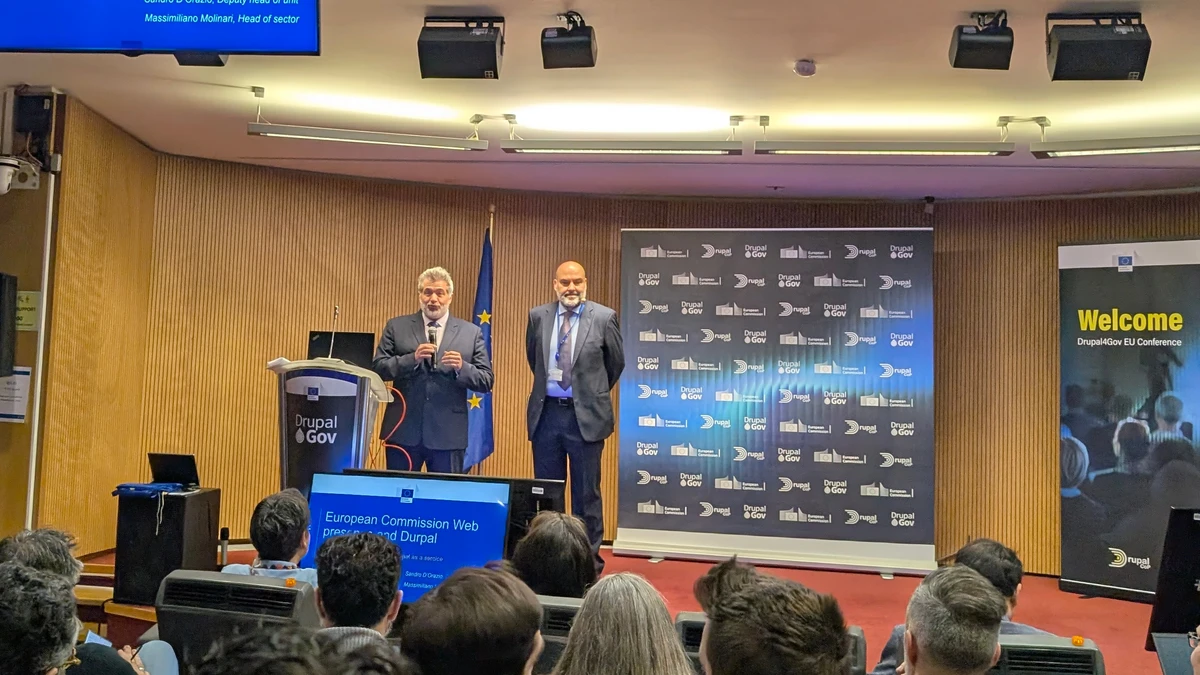
European Commission: Drupal as a Service for 770 Websites
Sandro D'Orazio and Massimiliano Molinari from the European Commission presented their Europa Web Publishing Platform (EWPP). The numbers are impressive: 770 live sites, 700 million visits per year, and 2.2 billion page views, operated by 44 different services across the Commission. The Commission transitioned to a Drupal "as a service" model starting in 2019 alongside the migration to Drupal 8, because individual departments (DGs) customizing their codebases made it increasingly difficult to deploy security patches, test new releases, and maintain a coherent user experience. The transition took four years, involving analysis of 160 websites and over 500 stakeholder meetings.
The lessons learned resonated: take a bottom-up approach and find compromises, build a stakeholder community along the way, work iteratively, communicate a lot, and do not underestimate content migration effort. However, the results speak for themselves: The platform now provides a consistent visual identity through the Europa Component Library (ECL), seamless deployment ("test once, deploy everywhere"), content sharing across sites with a corporate taxonomy, advanced multilingualism, and integrated thematic analytics across the entire web presence. All driven by Drupal - impressive!
As someone working on mossbo, our decoupled Drupal SAAS, I found this particularly interesting. We follow a similar platform approach, but in mossbo the data model can vary by site and each site can have its own frontend components. This is a pragmatic approach that gives more flexibility while still gaining the benefits of a standardized solution.

Drupal Case Studies from Across Europe
Beyond the European Commission, the day was packed with impressive case studies showing the breadth of Drupal adoption across European institutions and national governments. At the European Union Aviation Safety Agency (EASA), Drupal powers the Sustainability Portal: A complex regulatory compliance platform serving over 350 airlines and 31 national authorities for the EU's ReFuelEU Aviation regulation and the EU Flight Emissions Label. Notably, EASA has built its entire digital stack around open source, with Drupal at the centre alongside Matomo for analytics and Mautic for email marketing.
The Dutch IT provider DICTU presented GovNL CMS for the Dutch national government. This component-based Drupal platform reduces government website deployment time from three months to ten minutes by leveraging reusable design tokens, Drupal Recipes, and automated infrastructure. The project won the 2025 Drupal Splash Award in the Government category and is a great model for how governments can industrialize website delivery.
From France, ecedi showcased another large Drupal deployment: more than 60 websites and 20+ participatory platforms, based on Dialoguons, their Drupal based civic participation platform. The work has been done for the French Ministry of Ecological Transition and comes with a reusable starterkit implementing the French State Design System (DSFR). Also from France, the Interministerial Directorate for Public Transformation (DITP) demonstrated how their Services Publics+ platform integrates AI directly into Drupal to analyse citizen feedback at scale, leveraging AI for trend analysis across 140,000+ citizen experiences.
The AI topic continued with an impressive session by the Swiss agency Liip, where it was great to see former drunomics team member Josef Kruckenberg present LiipGPT, their AI-powered solution already in use by the Canton of Basel-Stadt. What stood out was their rigorous approach to quality: every AI-generated sentence is fact-checked against the source data with clear metrics on accuracy. Their editor integration also showed thoughtful UX design for AI-assisted content workflows. Finally, the European Data Protection Supervisor (EDPS) presented the Website Evidence Collector (WEC). The open-source CLI tool automatically scans websites for privacy compliance issues like third-party cookies, tracking beacons, and insecure data transfers.
LocalGov Drupal: A Collaborative Platform for Local Government
One of the most impressive sessions was by Mark Conroy (markconroy) and Greg Harvey (greg.harvey), who presented LocalGov Drupal, an open-source Drupal distribution built collaboratively across the UK and Ireland. With over 58 councils already live on the platform, it has clearly gained serious traction. The idea is simple but powerful: every council website needs the same building blocks (news, events, service pages, directories, step-by-step guides), so why should each council build them from scratch? Instead, councils pool their development budgets and share a common Drupal codebase, with every new feature contributed back for everyone to use.
The results are impressive: typical cost savings of 50–80% compared to building a custom council website. The project is governed by an Open Digital Cooperative, ensuring long-term sustainability and council ownership. The distribution builds on proven UX patterns, meets WCAG 2.1 AA accessibility standards out of the box, and includes a microsites platform for managing fleets of smaller sites from a single codebase. What makes LocalGov Drupal particularly interesting is the collaborative model behind it: it's not just shared code, but shared research, shared user testing, and shared expertise across an entire sector. The session focused on expanding this model to more European countries. A LocalGov France adaptation is already up and running, while other countries and languages can be added easily. The "build once, reuse often" philosophy resonates strongly with what we also see at projects like GovNL CMS, and I believe it's a model that could work very well in other countries too.
Achieving Digital Sovereignty with Open Source
Drupal4Gov EU 2026 made one thing clear: the tools, the community, and the expertise are all there. European governments aren't just using open source, they're building real digital sovereignty with it, one project at a time. And the urgency is real: governments locked into proprietary vendors seeing costs explode, critical infrastructure that can be remotely disabled, and an EU-US Data Privacy Framework that rests on a US Executive Order that could be revoked anytime. Open source provides an interesting approach to sovereignty: Instead of isolationism, it's propagating independence and cooperation at the same time.
The day's closing talk by Tiffany Farriss, Board of Directors of the Drupal Association, drove this home: most organizations use open source, but few truly leverage it. The difference isn't the tools, it's the mindset. And critically, it's a lot about procurement. She proposed concrete policies to bridge that gap: a "Sovereign Score" worth 20% of tender points, to separate the makers from the takers and fakers in open-source procurement. A standard percentage of contract value allocated to open-source maintenance. And a 30-day upstream rule requiring that non-sensitive code be contributed back to the community within 30 days. These are practical, implementable ideas that would ensure the open-source projects governments depend on remain healthy and sustainable.
With EU policy discussions underway to improve how open source is procured and sustained, the shift from incremental adoption to truly transformational results feels closer than ever. And as this day in Brussels showed, Drupal is already playing a key role in making that happen!